The Mingo Pugliese tango method is still considered to be one of the best ways to learn tango.
But do you know that it was created by one of the the most influential tango dancers and teachers of the last century?
The Mingo Pugliese tango method is still considered to be one of the best ways to learn tango.
But do you know that it was created by one of the the most influential tango dancers and teachers of the last century?
Tango — music or dance — always elicits an emotional response. When we hear it, we can feel the fire of love and passion or the pain of loss and nostalgia. When we dance to it, we can feel how sensual, beautiful, and dangerous it can be.
Tango is undeniably an unmatched experience, but if there’s one more thing we need to learn about tango, it is that there’s a superstition surrounding it.
For some, “Adiós Muchachos” is just a tango song meant to be danced to. For others, “Adiós Muchachos” is much more than that; it’s one tango you should not dance to.
Tango is a conversation between two people, and each movement has a purpose, including every turn.
Beginners may find it difficult to spot a tango turn because dancers often look like they’re “turning.” But, the structure of turns in tango has its own purpose, charm, and feeling.
Once you understand it, you’ll learn how you can carry the conversation in a dance yourself.
Read MoreBecause tango has remained, in large part, a dance that is taught and spread by word-of-mouth, it can be difficult to find a repository of information that has compiled all pertinent aspects of tango in one place. This is especially true when it comes to the songs or orchestras used for dancing. While it may be a little easier for natives of Buenos Aires to find information about tango — seeing as it’s a part of their national culture — much of the Western world appears to only have scattered information about the lives and works of tango singers, composers, and dancers.
In that respect, one such website stands out, and it may be considered one of the most comprehensive spaces on the internet to provide well-researched information and even first-hand interviews involving tango personalities.
Read MoreThe site is called TodoTango, which is dedicated to all things tango, from its compendium of tango songs to its compilation of tango-related articles that provide information that might not normally be found in other blogs.
“They call me Pupi. My real name is Ernesto Castello but everyone calls me Pupi. In fact, it should be 'puppy.'”
This introduction — taken from the 2005 BBC 4 documentary “La Confiteria Ideal: The Tango Salon” — is perhaps the best way one can acquaint oneself with Ernesto Norberto “Pupi” Castello. All smiles and brimming with what could perhaps be described as subdued energy, Pupi instantly radiates an arresting personality.
Read MoreFrom his tone of voice, body language, and expressions, it’s not difficult to see why this tango legend is often viewed as the life of the party.
When you watch a couple dancing the tango, it’s impossible to miss the passion, intensity, and masculine energy that oozes from every pore.
It’s no wonder that tango is often referred to by many as the most masculine dance that exists.
Is tango really a masculine dance? If so, what makes tango so masculine?
Read MoreThis is a common question that dancers and music enthusiasts often debate. Some say that the music should come first because the dance is just a bunch of steps. Others find that the music is a necessary part of the experience, embedded in the dance itself. All these questions gave birth to neolonga and neotango, which eventually became two more controversial topics.
Who is Damian Esell? If you haven’t heard of his name before, now is the best time to become acquainted.
Let’s get to know Damian Esell as a living visual artist and tango legend!
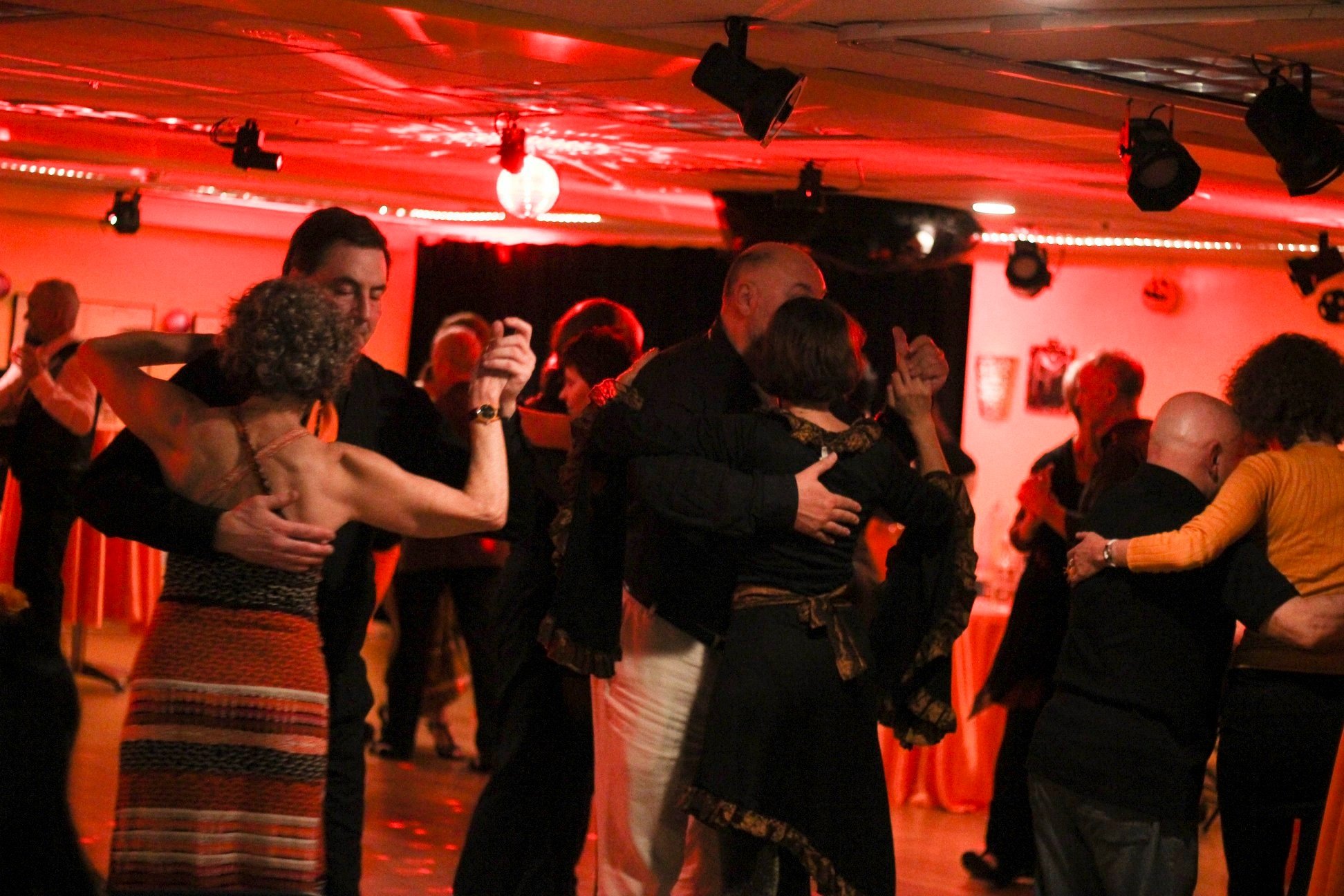
Read MoreMilonga as a tango party can be large or small, formal or informal.
At a milonga, you'll usually find a mix of people called the “milongueros” — some who are there to dance and others who are there to listen to the music and watch the dancers.
Read MoreMilongas typically take place in tango clubs or studios, but they can also be held in other venues such as restaurants, bars, or even outdoors in parks.
If tango is like a stealthy panther, then milonga is its nimble parent.
Getting to know the milonga can be confusing as the term has three meanings: dance, music, and social tango.
The dance shows a faster side of tango. Yes, tango came from an even quicker dance! Think of it this way: you meet some families where the children clearly take after their parents but have their own quirks.
Milonga and tango are the same way; the tango has similar characteristics but is different enough to warrant its own recognition.
Let’s become acquainted with milonga, the origin of tango.
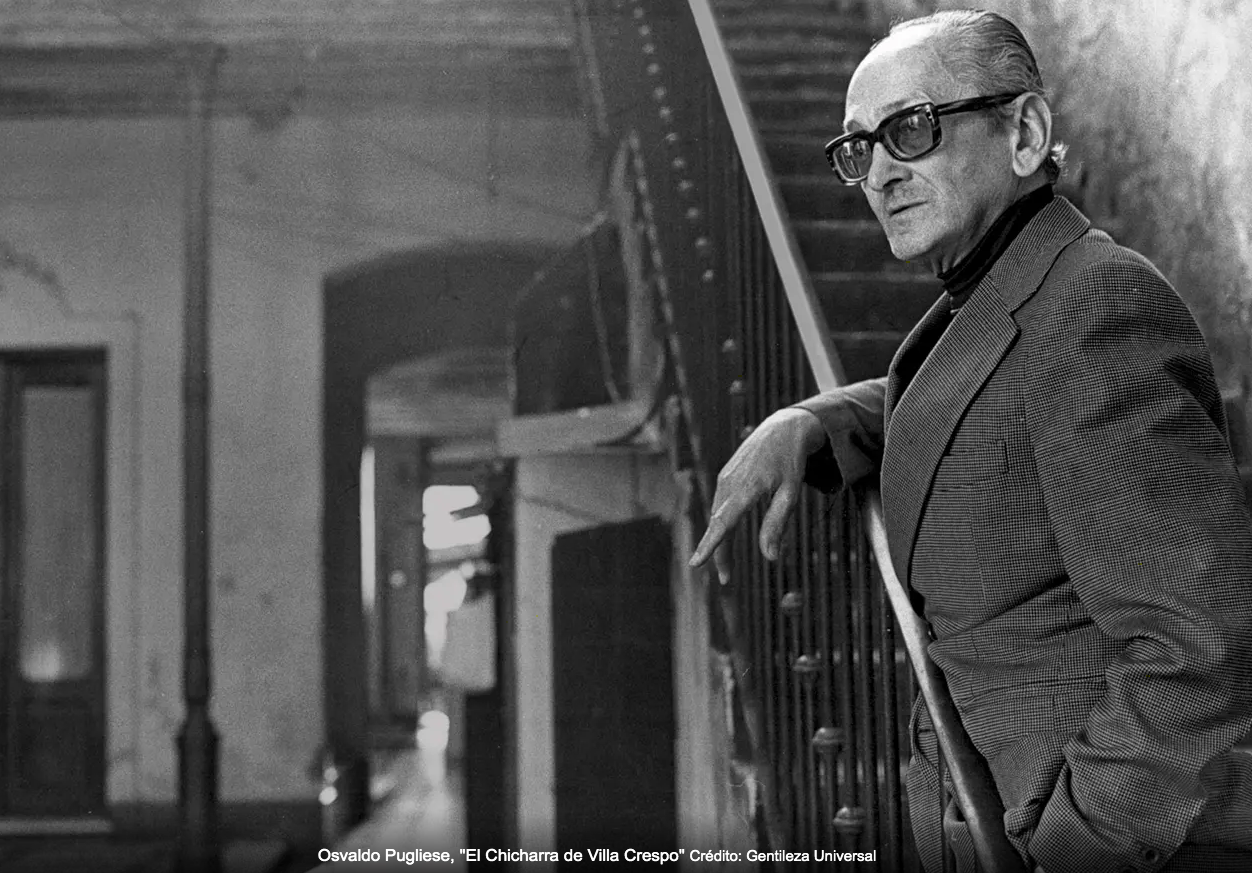
Read More"D’Arienzo pushes the beat, and Di Sarli the melody. Many orchestras can be placed, more or less conveniently, on an axis between these two poles. Troilo, who pushes the lyric, hints at another dimension, but we can say that he blends the two impulses, or moves between them, and leave it at that.
Pugliese destroys these notions of a simple classification of tango music into the rhythmic and the lyrical.
These two forces are present simultaneously in his music, it’s not that he’s “off the scale” — he’s not even on the scale in the first place."
Pugliese's tension and release in his tango are one of a kind. The way he builds and releases tension is what strikes listeners.
This can be heard and felt in his signature song, “La Yumba.” Pugliese gives a moment of respite when the beat grows too forceful and tense.
Read MoreDancing the tango can seem impossible for beginners if you don’t understand Argentine tango musicality. It’s true; dancing the Argentine tango isn’t just about the music, but the two will always be inseparable because music is integral to dance.
More often than not, when someone is just beginning to learn about tango, steps and figures tend to take center stage in lessons. However, the study of proper floor craft and etiquette on the dance floor is equally important. Tango Mentor makes a strong case for this with a simple explanation:
“Without learning floorcraft, any other skills you learn are useless. You can learn the most complicated and the most attractive moves, but if you can’t use them because you don’t have enough space, your efforts are in vain.”
Thus, to form the foundations of good tango dancing, one must make an effort to also perfect floor craft, which, in some tango communities, seem to be a forgotten skill altogether.
What exactly is floor craft, and how does one improve their skills?
Read MoreThe tango dance is famous all over the globe because of its passionate charm and playful dynamics. Nevertheless, the rise of this iconic partner dance would not be possible without matching tango music. This form of music is typically played with gusto by a tango orchestra.
People need to understand tango music to comprehend how the dance has made a major impact in cultural and artistic ways throughout its rich history that spans different countries.
Read on to learn what tango music is and what its history is. Find out what a tango orchestra is and which musical instruments are typically played by this ensemble. Get to know some of the most popular modern orchestras in the tango world that you need to hear.
Read MoreThe world knows many tango music classics. “Por una Cabeza,” “El Choclo,” and “La Cumparsita” are all tunes, along with other tango songs that are regularly played in tango shows and at milongas around the world. They are popular for a reason: they give dancers a great tango experience.
If there’s a list of tango songs that you shall not dance to, you’ll most likely find this title.
“Poema” teaches us that while we consider all tango songs as works of art, there are some that just make us question why they were created in the first place.
What’s even more fascinating is that this level of non-verbal communication isn’t just reserved for the pros. In fact, it’s in tango itself.
Tango, to some, is just one of the many dances out there. But to others, it’s a way of connecting, growing, and communicating with a partner.
One of the first things you learn about tango is that there’s a leader and a follower.
And while both the leader and follower have individual responsibilities, many tango dancers say that the leader has more.
The big question is… Is that true?
Read More…a tango DJ played “Plegaria” during a tango festival, and an old woman came up to him. With tears in her eyes, the old woman asked the DJ to never play this song again, explaining that she was a survivor of the Nazi concentration camps and that “Plegaria” was one of the songs that Nazi officers forced Jewish musicians to play. Being made aware of this, the tango DJ never played this song again.
In many tango circles, “Plegaria” has become known as the “tango you shall not dance.”
Read MoreIt allows you to be just you. It takes you in - in whatever mood you arrive. Tango does not care about whatever you are showing on the outside.
Tango does not care about whatever you are showing on the outside. Tango focuses internally - the outward expression such as your smile and joy can remain unexposed.
You can be happy without forcing yourself to show it to others.
Tango, unlike any other dances, requires focus and presence of mind. It is a dance that relies on improvisation and adaptability.
It’s like navigating through the final stages of business negotiations. You know what to expect, yet anything can happen.
Read More